Prepared by Caleb Shetland, Johanna Yoon, Kam Woods,
David Knouf, and Stefan Gary
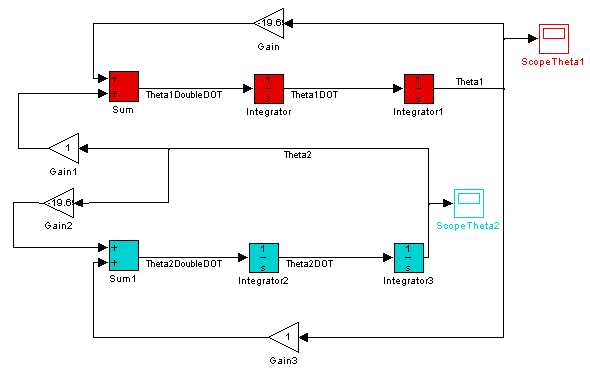
The analog computer was designed with the following model in mind:
In order to model the motion of one pendulum, the system needed to consist of a gain, a summing op amp, two integrators, and an extra inverting gain of 1. Materials used for construction of this design are the table below.
| Resistors | Capacitors | Op Amps | |
| Sum/Gain Blocks | 4 Mohm, 2 47kohm | 0 | 2 |
| Integrators | 4 Mohm | 4 1uF | 4 |
We eventually condensed the gain and summing blocks into the same op amp circuit, thereby reducing the number of op amps per pendulum to three. The system that would model the motion of one pendulum was assembled on separate breadboards, testing at every addition/modification. The two circuits were connected to each other and to the data acquisition board. A script was written in C++ that would display the simulation of the motion of the two pendulum system on the computer screen. A Wavetek function generator supplied the input to the system, and the output was also displayed on an oscilloscope.
The circuit diagrams for each of the signal-processing blocks used in the Simulink model above are shown in Figures 1 through 3. The components for each block were assembled on prototyping boards; the blocks required for each pendulum were assembled and tested separately.
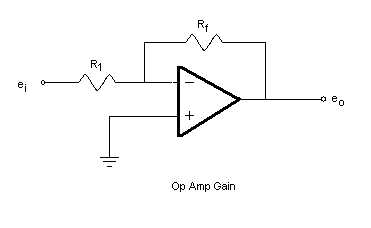
Figure 1
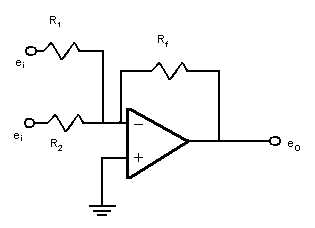
Figure 2
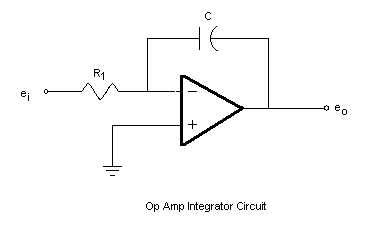
Figure 3
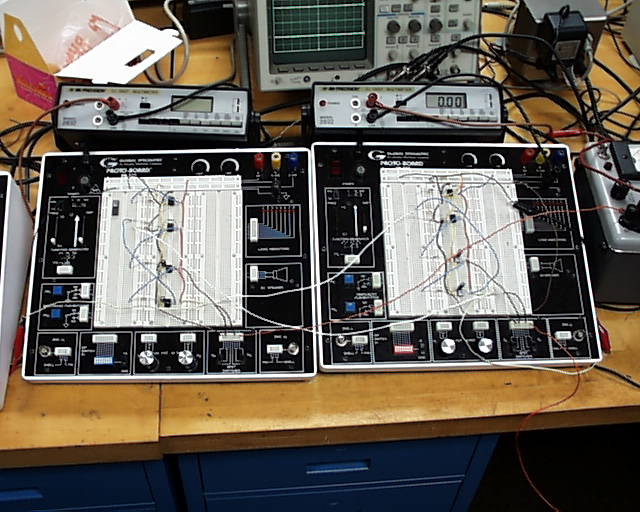
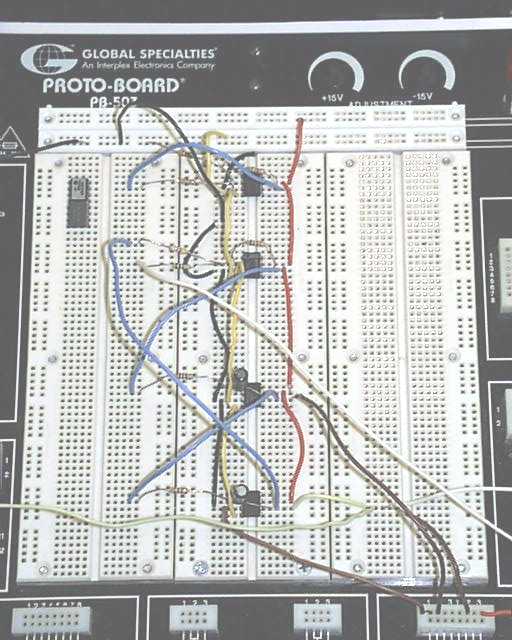
Once each half of the system was confirmed to accurately represent the behavior of a single pendulum, the two were connected as in the Simulink model. Pictures of the completed prototype system are shown in Figures 4 and 5. The circuit was then layed out compactly preparatory to soldering on a project board; that stage is depicted in Figure 6.
 |
 |
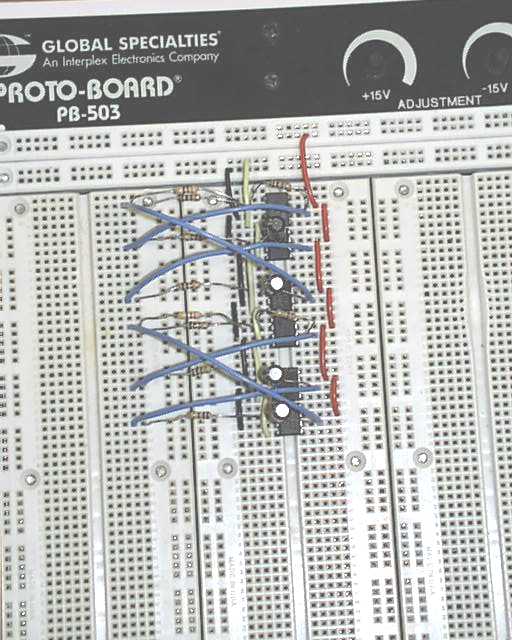 |
| Figure 4 | Figure 5 | Figure 6 |
The circuit was then reproduced in its final form on a circuit board and placed in a project box; openings were drilled for the outputs and for switches controlling the initial conditions. Two 9V batteries inside the box were used to power the op-amps.